
Clearance rates at 4-year low. Two hikes. Here's what I'm watching.
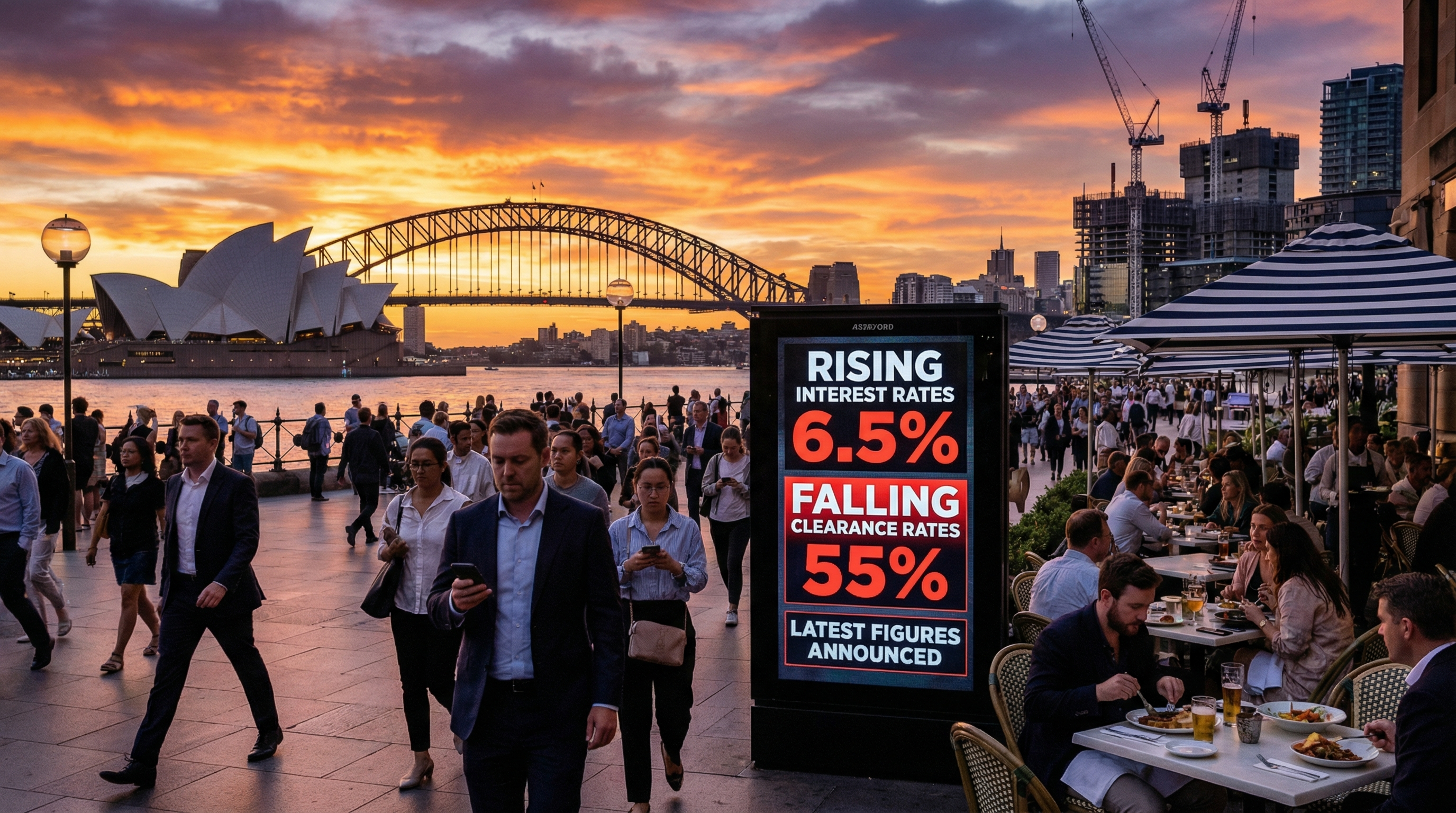
Two hikes done, two more priced in — and clearance rates just hit levels we haven't seen since 2022
🏦 Market Pulse
The RBA's March board meeting delivered a second consecutive 25bp hike, taking the cash rate to 4.1%. The decision was split but unsurprising. The board cited renewed inflationary pressure in H2 2025, a tightening labour market, and elevated uncertainty from the Middle East conflict as reasons the cycle isn't finished.
Markets are now pricing at least two more hikes this year, potentially taking the cash rate to 4.6% before any pause. ANZ is forecasting 4.35% by May.
The auction market is already absorbing the impact. Easter weekend preliminary clearance rates came in at 55.5% nationally. That's the lowest result since July 2022 and the first time the preliminary rate has dropped below 60% since December 2022. Sydney was the weakest at 53.4%. Melbourne came in at 58.3%, the lowest since September 2024.
Dwelling values are following. Sydney is down 0.2% over the past 28 days. Melbourne is down 0.3%. High for-sale listing volumes in both cities mean buyers have genuine choice and sellers are under real pressure for the first time in years.
My read: Sydney and Melbourne are in a slight correction. It's just a step backwards in each city's market cycle. The investors who treat this as the whole picture will miss what's happening in Perth, Darwin and parts of Queensland, where the fundamentals are playing a completely different game right now.
📍 Suburb Spotlight: Kin Kora, QLD 4680
Why it's on the radar:
While eastern capitals absorb rate hike pressure, Gladstone is quietly building one of the most diversified industrial economies in regional Australia.
The region is home to around half of Queensland's 50-plus registered hydrogen projects that form part of a forecasted $33 billion pipeline that the Queensland Government expects to support thousands of skilled jobs through to 2040.
Add the existing LNG export terminals, the $2 billion Hydrogen Headstart program, and a proposed Renewable Energy Industrial Precinct requiring roughly $30 billion in transmission and storage investment, and you're looking at sustained, long-tenure employment demand that goes well beyond a single commodity cycle.
Kin Kora sits right in the middle of it. It's a well-established residential suburb within the Gladstone Regional Council area — high owner-occupancy (67%), family-oriented, and close to the major employment nodes. The yield maths work today, and the growth drivers are accumulating underneath.
The numbers:
- Median house price: $546,000 (CoreLogic, current)
- Median weekly rent: $530
- Gross rental yield: 5.31%
- 12-month capital growth: 14.16%
- Average days on market: 15
- House sales (12 months): 84
- Gladstone regional vacancy rate: ~1% - 2% (SQM Research)
What to watch:
Gladstone has burned investors before. If you were here during the 2012-2015 LNG construction boom, you saw what happens when a market overshoots on speculative builds.
The difference this time is diversification. Hydrogen, renewables, and traditional resources running in parallel means the employment base isn't a one-trick pony. But the discipline is the same: buy at the right price, stress-test the rental income at higher rates, and don't assume growth continues in a straight line.
Educational analysis only. Not a property recommendation. Data: CoreLogic (via Your Investment Property Magazine), SQM Research, Queensland Government, CSIRO HyResource.
💡 Investor Insight: Yield vs Growth — You Probably Don't Have to Choose
One of the most persistent myths in property investing is that yield and growth are a trade-off. You get one or the other.
And even though yield and growth do have an inverse relationship. It's mostly false.
Growth is driven by constraint. When demand is high and supply can't respond physically, through geography or zoning, or economically, through build costs...
So prices go up.
That's Sydney's harbour suburbs, inner Melbourne, coastal Queensland.
Yield is driven by affordability. When a property's purchase price is low relative to market rents, the numbers work. Outer metro, regional, and markets that have lagged the median tend to deliver here.
The sweet spot, where the best buying sits right now, is a suburb where the yield works today and the growth drivers are accumulating. Defence spending, infrastructure investment, population growth, new employment hubs: these are the things that convert a high-yield market into a growth market over 5–7 years.
In a high-rate environment, yield keeps you in the game long enough to win. Investors chasing pure growth in rate-sensitive markets right now are fighting the tide.
Investors backing yield with a credible growth thesis are positioning themselves for the next cycle.
📋 From Shrewdy
Easter week quietened buying activity, as it always does. However, the quality of the briefs I'm currently working on tells me motivated investors haven't gone anywhere.
We are adjusting our approach though. If you want to understand how the current rate environment changes — or doesn't change — a well-structured investment strategy, book a free consultation at shrewdy.com.au.
Jake Milne
CEO & Lead Buyers Agent, Shrewdy
shrewdy.com.au
This newsletter is general in nature and does not constitute licensed real estate or financial advice. Past performance is not a reliable indicator of future results.
Research sources: RBA monetary policy statement (March 2026), CoreLogic clearance rate data (via Cotality), CoreLogic suburb data (via Your Investment Property Magazine), SQM Research vacancy data, Queensland Government ministerial statements, CSIRO HyResource, Beyond Zero Emissions.